Build a Real Home Gym for Under $500
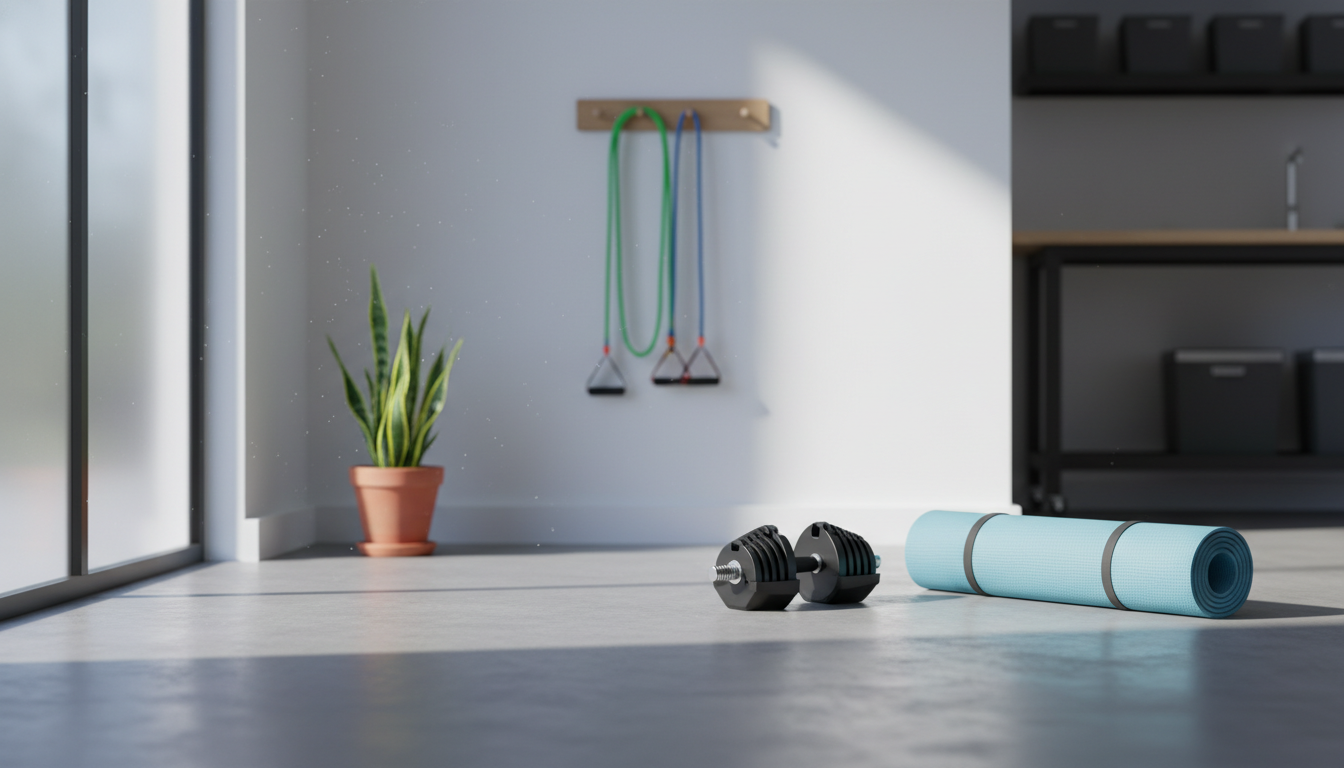
You want a training space that actually gets used, not a coat rack with a pull-up bar. The good news: a fully functional setup costs less than a year of gym membership if you buy smart and skip the fluff.
Start With the Floor, Not the Equipment
A proper workout surface prevents injury and protects your floors. Before ordering a single weight, pick up Rubber Gym Flooring Tiles. A 10x10 ft area covered in 3/4” interlocking rubber tiles runs $80–$130 and handles barbell drops, kettlebell swings, and jump rope without destroying hardwood or concrete.
This is the step most people skip and regret. Thin foam tiles compress and crack. Bare concrete is brutal on joints for anything involving standing volume. Get the rubber.
The Core Four: What Actually Covers Everything
You don’t need machines. You need four things that load the fundamental movement patterns — push, pull, hinge, squat.
1. Adjustable dumbbells A single pair of adjustable dumbbells replaces a full rack. The Bowflex SelectTech 552 adjusts from 5 to 52.5 lbs per dumbbell in 2.5 lb increments — enough range for curls up to heavy rows and goblet squats. They run around $350–$400 for the pair. That sounds steep until you price out a comparable fixed dumbbell set.
If that’s over budget, the PowerBlock Sport 24 covers 3–24 lbs for around $130 and expands with add-on kits later. Good starting point for lighter training or limited space.
2. Pull-up bar A doorframe pull-up bar handles vertical pulling, and the best ones also let you do hanging core work. Look for a model with multiple grip positions. They run $25–$45.
3. Resistance bands A set of loop bands fills every gap — warm-ups, accessory work, assisted pull-ups, banded push-ups. The Fit Simplify Resistance Loop Bands come in five resistance levels and cost under $15. Grab them before anything else.
4. Adjustable bench (optional but high-leverage) A flat bench unlocks incline/decline pressing with dumbbells, step-ups, Bulgarian split squats, and seated rows with bands. A decent adjustable bench runs $100–$180. Not essential day one, but it’s the upgrade that opens the most programming options.
What to Skip (At Least Early On)
Cardio machines — A jump rope and some open floor handle conditioning better than a $400 entry-level stationary bike. The Crossrope Get Lean Set is a legitimate conditioning tool at under $100.
Weight benches with built-in racks — The combo units you see for $150 at big-box stores wobble under real load. A rack you can trust costs $400+ on its own. If barbell work matters to you, save separately for a standalone power rack. Don’t compromise on structural gear.
Cable machines under $300 — They’re underbuit and break. Bands and dumbbells replicate 80% of cable exercises without the maintenance headache.
Making $300 Actually Work
If $300 is the real ceiling, here’s how to prioritize:
- $15 — Resistance bands (get these first, use immediately)
- $40 — Doorframe pull-up bar
- $100–$130 — Adjustable dumbbells (PowerBlock Sport 24 or similar)
- $90–$120 — Rubber flooring for a 6x8 ft area
That leaves zero room for extras, but it covers push, pull, hinge, and squat. You can run a serious 4-day program with just those four items. Add an adjustable bench in month two when you’ve saved another $150.
Programming the Space You Have
Gear without a plan is just clutter. A minimal home gym works best with programs designed for it — not templates written around a commercial gym’s equipment list.
For dumbbell-only work, Athlean-X’s Xero program or any structured Push/Pull/Legs split built around dumbbells and bodyweight handles the gap. Consistency in a small space beats occasional visits to a full facility.
Track workouts from day one. You’ll use the gym more when you can see progress.
The Space Question
A 6x8 ft footprint is enough to train seriously — that’s about the size of a parking space. A spare bedroom corner, a section of garage, or even a basement utility room works. What matters more than square footage is permanent setup: if the gear stays out, you use it; if you have to assemble it each session, you won’t.
Bottom line: A pull-up bar, resistance bands, adjustable dumbbells, and rubber flooring get you 90% of the training stimulus of a $2,000 setup for under $250. Add an adjustable bench when the budget allows and you’ve built a gym most people would genuinely prefer over commuting to a facility.
Where to buy
- Rubber Gym Flooring Tiles
- Bowflex SelectTech 552
- PowerBlock Sport 24
- Fit Simplify Resistance Loop Bands
- Crossrope Get Lean Set